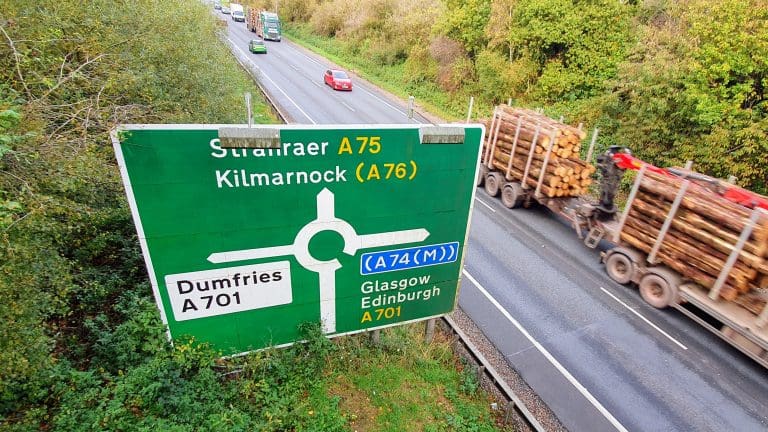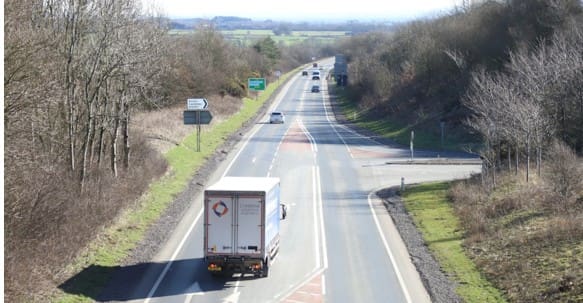
Transport Scotland, in partnership with Dumfries and Galloway Council, is introducing new 20mph speed limits on sections of the trunk road network to improve road safety and encourage active travel.
Carronbridge
From 6th March 2026, 20mph speed limits will be introduced on:
• A76 at Carronbridge from a point just north of the junction with Waulkmill Park to a point a short distance north of the junction with Carronbank. The total length of this stretch is approximately 528 metres.
Thornhill
On 13th March 2026, 20mph speed limits will be introduced on:
• A76 at Thornhill from a point just north of the junction with the A702 at Gill Street to a point a short distance south of the junction with Cairnkinna Crescent. The total length of this stretch is approximately 762 metres.
Kirkconnel
On 20th March 2026, 20mph speed limits will be introduced on:
• A76 at Kirkconnel from a point just west of the junction with Duke Street to a point a short distance east of the junction with Polveoch Terrace. The total length of this stretch is approximately 1.33 kilometres.
Sanquhar
On 31st March 2026, 20mph speed limits will be introduced on:
• A76 at Sanquhar from a point just north of the junction with Castlemains Road to a point further north of the junction with Blackaddie Road. The total length of this stretch is approximately 1.521 kilometres.
Transport Scotland will introduce 20mph limits on the A76 Trunk Road in collaboration with Dumfries and Galloway Councils introduction of 20mph speed limits on the public road network within Carronbridge, Thornhill, Sanquhar and Kirkconnel. Both organisations will implement the change at the same time, helping to keep speeds consistent along the main route through the community and ensuring a more consistent approach across the area.
These changes are part of a wider initiative to make roads safer for pedestrians, cyclists, and all road users. The limits will be introduced under Temporary Traffic Regulation Orders (TTROs) for up to 18 months, allowing Transport Scotland and Dumfries and Galloway Council to monitor and evaluate their impact before deciding whether to make them permanent.
Why 20mph?
Research shows that reducing speed significantly lowers the risk of serious injury in collisions. At 20mph, the likelihood of survival for a pedestrian hit by a car is seven times higher than at 30mph. These measures form part of Scotland’s Road Safety Framework to 2030, which prioritises reducing excessive speed and creating safer, more accessible roads for everyone.
Further Information
The introduction of 20 mph speed limits follows a structured process developed in partnership with local authorities and Police Scotland, using agreed assessment criteria to identify suitable roads—primarily those currently subject to 30 mph limits.
Key steps in the process include:
• Baseline speed surveys are conducted prior to implementation to establish existing traffic speeds.
• The 20 mph limits are introduced under Temporary Traffic Regulation Orders (TTROs) for a maximum duration of 18 months.
• During this period, vehicle speeds are monitored to assess the effectiveness of the lower limit.
• Follow-up speed surveys are carried out to determine whether any mitigation measures or adjustments are needed.
• Feedback from stakeholders, including Police Scotland and the local community, will be considered as part of the evaluation.
If the 20 mph speed limit is deemed successful, a Permanent Traffic Regulation Order (PTRO) will be promoted. This process includes public consultation, during which residents and organisations can provide feedback before any permanent change is made.
Construction is currently underway, and residents may notice signs and poles being installed in preparation for the new speed limits. These will remain obscured until the limits come into effect.
Detailed information is available at:
https://www.transport.gov.scot/publication/the-implementation-guide-for-20-mph-speed-limits-in-scotland/
One partner. No competitors. Full visibility across the region.